
How your manufacturing company can take the niche
For a manufacturing business, a standard SEO strategy aimed at getting "as many general keywords as possible" won't work.

From part 1, we learned that no matter how technically advanced a company website is, it won't generate leads if people cannot find it online. But how do you do this in practice? For a manufacturing business, a standard SEO strategy aimed at getting "as many general keywords as possible" won't work. There's no point in attracting hobbyists – what you need is a conversation with the CEO, purchaser or the lead engineer who is trying to tackle a complicated task.
The benefit of specificity: SEO for manufacturing and niche keywords
SEO for manufacturing isn't about numbers but about relevance and long-tail phrases. In an industry that is all about precision, the technical nature of the products must be reflected on your website as well. If your specialization is high-tech drive systems or intricate mechanical engineering, make sure your keywords match your competence.
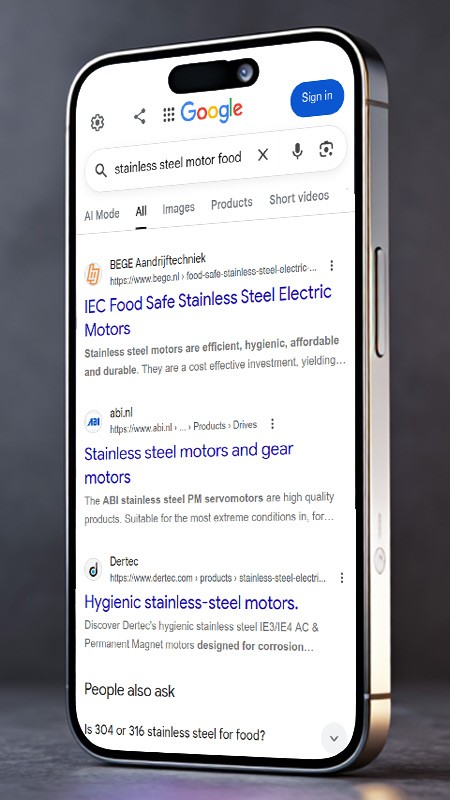
By choosing a niche term like ‘stainless steel motor food’ and supporting it with thorough, high-quality content, you attract leads at the very beginning of a lengthy purchasing journey. Such a lead already has the budget and a pressing problem. Thus, you increase your chance of success with a SEO strategy.

What a modern manufacturer can learn from the BEGE case study
So what would a website look like to convince Google and the customer simultaneously? The results of the BEGE case study provide a clear example. BEGE ranks #1 on Google for ‘stainless steel motor food’. What makes this strategy relevant for a manufacturing company?
1. High relevance due to industry-oriented content
Rather than a generic story about the brand, the company's expertise lies in applying the technology in certain sectors, such as the food industry. BEGE positions itself as a leader in the development of drives for food-safe and hygienic purposes.
2. Depth of knowledge
It covers the issues that may occur even before they arise. From materials to support stages, this page reflects expertise. Not a sales pitch, but specific specifications and solutions for complicated control tasks.
3. Focus on conversion
The main idea is not only to share information – you aim to drive users to make decisions. Clear calls-to-action will turn visitors into leads.
5 steps towards a manufacturing website that generates leads
There's no need to hire marketing experts in order to develop an SEO strategy for manufacturing. Follow these five steps to get the most of your company's technical expertise:
How engineers' queries for AI-driven searches can improve the SEO strategy for manufacturers
Engineers search online differently than they used to. With AI-powered services like ChatGPT and Gemini, searches aren't limited to keywords but consist of the entire question. Now people look for answers to specific queries like "What IP rating is required for a drive in an offshore saline environment?"
Your website will receive additional traffic if it has the answers to these questions. It means switching from shallow content to documentation of your expertise.
Every custom solution that you developed for one of the clients could be described in a new blog post or landing page that brings you leads for several years.
In order to rank high for such queries, create content in the following formats:
· Comparison articles
Which material is best suited to specific loads in a corrosive environment? By providing honest comparisons, you help the client during the specification phase.
· Problem solving solutions
How do you prevent wear and tear on intensive production lines? This type of content attracts leads looking for continuity and low-maintenance design
· Case studies
How did you solve a similar problem for another client in the manufacturing industry? Nothing convinces a technical director faster than a proven track record with a peer in the sector.
Turn your website into your best sales engineer
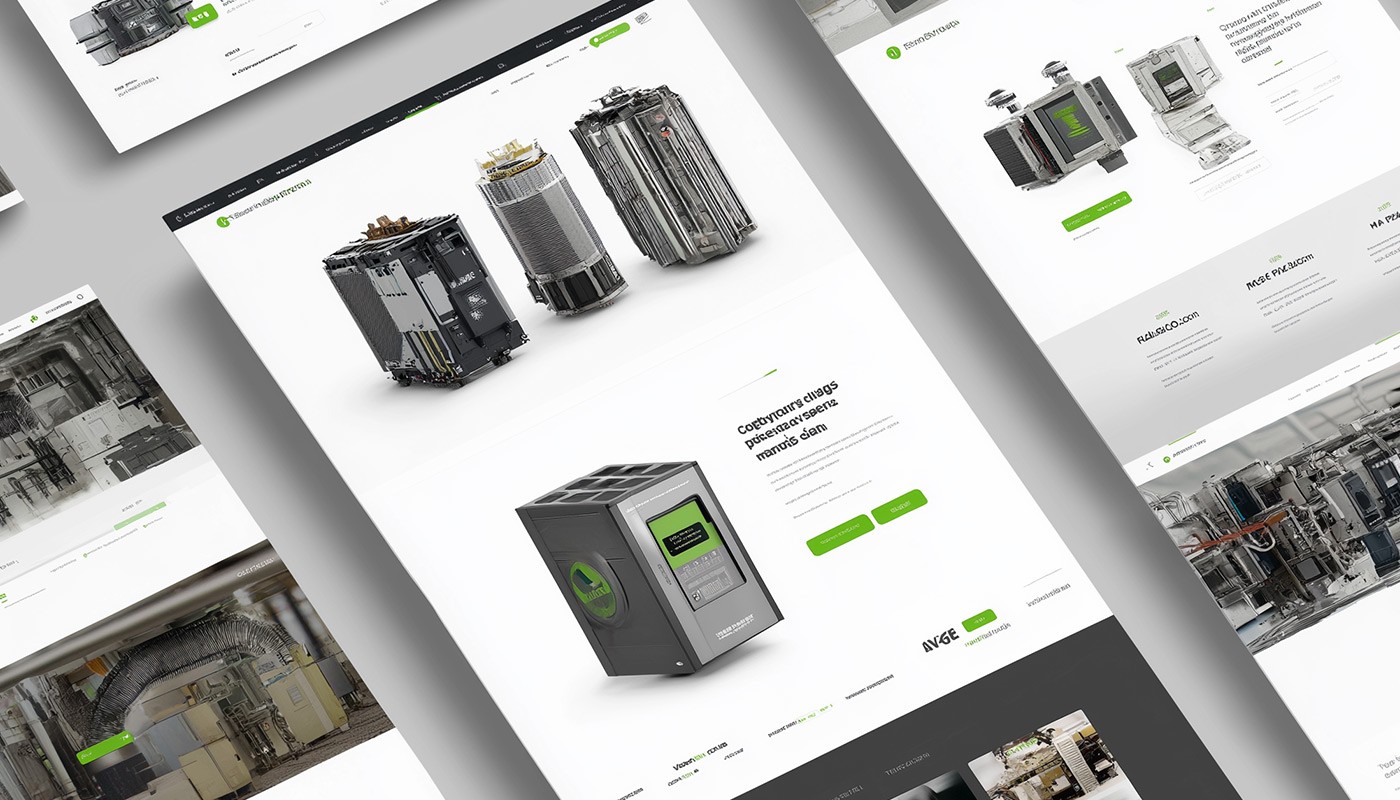
With the proper SEO strategy, your website works as a 24/7 sales engineer. It filters out unqualified requests and prepares leads for you before the first meeting takes place. By using appropriate terminology, publishing sector-specific case studies and emphasizing your unique selling point, you can make the barrier to entry for the competitors higher. It will bring you more projects.
In the world of manufacturing, reputation and credibility come first – and SEO is the key factor.
Part three will be focused on the future. Now that AI search algorithms (ChatGPT, Claude, Gemini) revolutionize engineers' search queries, how can you stay relevant after 2026?